AMD Radeon RX 9060 XT Review: The 1440p Gaming Champion That Actually Delivers
6 min read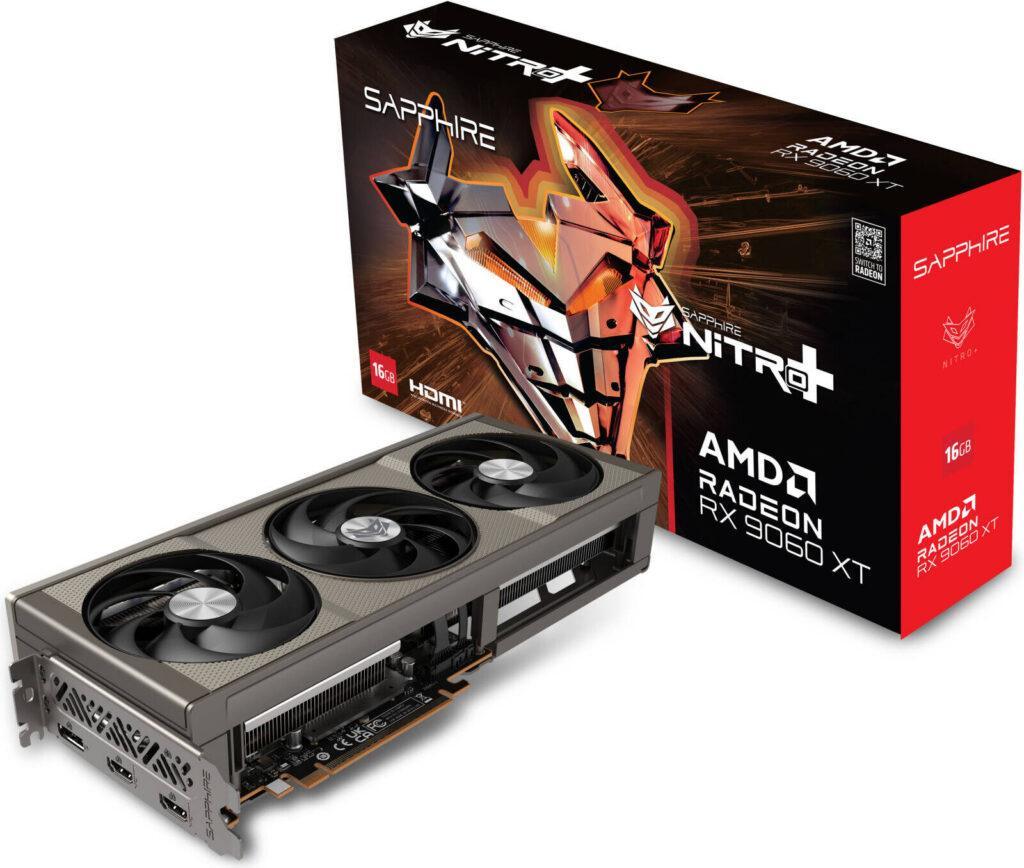
After months of anticipation, AMD’s RDNA 4 architecture has finally proven itself worthy of the hype. The AMD Radeon RX 9060 XT represents everything that was promised when RDNA 4 was first announced in February 2025 – dramatic improvements in ray tracing, AI performance, and overall gaming capabilities. This isn’t just another incremental upgrade; it’s AMD’s bold statement that they’re ready to seriously compete with NVIDIA in the mid-range gaming segment.
A New Era for AMD: RDNA 4’s Revolutionary Leap
The RX 9060 XT serves as the spiritual successor to the RX 7600 XT, but the improvements are so substantial that calling it a mere successor feels like an understatement. Built on TSMC’s refined N4P manufacturing process, this GPU packs 29.7 billion transistors into a 199mm² die – nearly identical in size to its predecessor while delivering dramatically better performance.
What makes this possible? The magic lies in RDNA 4’s architectural improvements. Each compute unit (CU) is roughly twice as fast as those found in RDNA 3, translating to approximately double the performance over the RX 7600 XT despite having the same 32 CU count.
Specifications That Matter
The RX 9060 XT comes equipped with specifications that address many of the pain points from AMD’s previous generation:
Core Specifications
- 32 Compute Units with 2,048 Stream Processors
- Game Clock: 2,530 MHz | Boost Clock: 3,130 MHz
- 16GB GDDR6 memory (128-bit bus) with 32MB Infinity Cache
- PCIe 5.0 x16 interface (upgraded from the 7600 XT’s limited x8 configuration)
- 160W TDP (down from 190W on the 7600 XT)
- Traditional 8-pin PCIe power connector (avoiding NVIDIA’s controversial 12VHPWR)
The move to a full PCIe 5.0 x16 configuration is particularly welcome, as it eliminates the performance bottlenecks that plagued older systems using PCIe 2.0 and 3.0 motherboards.
Ray Tracing: AMD Finally Gets Serious
For years, AMD’s ray tracing performance has been the Achilles’ heel that prevented their GPUs from being truly competitive with NVIDIA’s offerings. RDNA 4 changes this narrative completely with a 2x improvement in ray tracing performance per CU.
Cyberpunk 2077: A Former AMD Weakness Becomes a Strength
Cyberpunk 2077 has long favored NVIDIA GPUs due to their superior RT capabilities, but the RX 9060 XT flips this script entirely. The card delivers:
- 90 FPS at 1440p (raster performance)
- 47 FPS at 4K (raster performance)
- 63 FPS with RT Ultra preset at 1440p (with FSR Balanced upscaling)
- 36.4 FPS with Path Tracing (the most demanding RT setting available)
The fact that this mid-range card can handle path tracing at playable frame rates – something that was exclusively high-end territory just a year ago – demonstrates the magnitude of AMD’s ray tracing improvements.
Real-World RT Performance Across Games
The ray tracing improvements extend across multiple titles:
- Hogwarts Legacy: 50+ FPS at 4K with Ultra RT settings (FSR Quality enabled)
- F1 24: 70 FPS at 1440p with maximum RT settings
- Indiana Jones and the Great Circle: 40 FPS at 1440p with RT and FSR Performance
FSR 4: The Game-Changing AI Upscaler
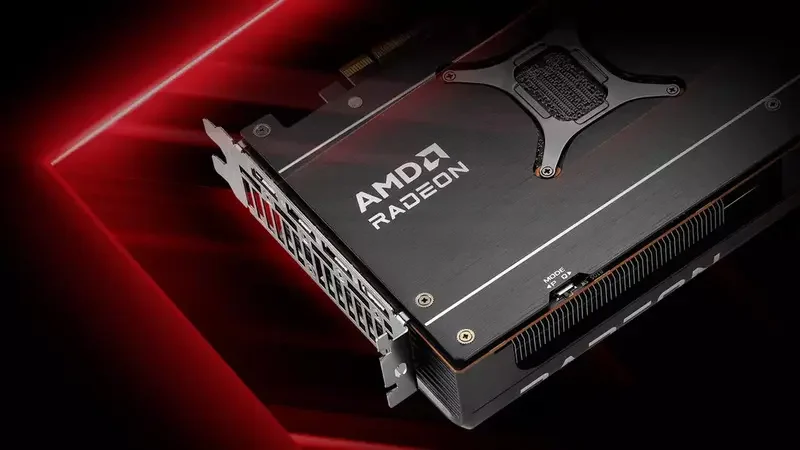
AMD’s new FSR 4 upscaling technology represents perhaps the biggest leap forward for the company’s software ecosystem. Unlike the spatial (FSR 1) and temporal (FSR 2) upscalers that were widely criticized for poor image quality, FSR 4 uses AI acceleration to deliver results that match or exceed NVIDIA’s DLSS 3.
Horizon Zero Dawn Remastered: FSR 4 Showcase
This title serves as the perfect demonstration of FSR 4’s capabilities:
- 100 FPS at 1440p (native rendering)
- 60 FPS at 4K (native rendering)
- 100+ FPS at 4K with FSR 4 frame generation
The combination of AI upscaling and frame generation allows the RX 9060 XT to punch well above its weight class, delivering 4K gaming experiences that were previously reserved for much more expensive hardware.
Gaming Performance: Exceeding Expectations
AMD positioned the RX 9060 XT as a “high-frame-rate 1440p gaming GPU,” and the benchmarks confirm this marketing claim while revealing the card’s ability to venture into 4K territory.
1440p Gaming Excellence
Across a diverse range of modern titles, the RX 9060 XT consistently delivers excellent 1440p performance:
- Counter-Strike 2: 200+ FPS (perfect for competitive gaming)
- STALKER 2: 50 FPS with demanding software ray tracing
- Microsoft Flight Simulator 2024: 70 FPS (more than sufficient for simulation)
- Assetto Corsa Competizione: 70 FPS (ideal for racing enthusiasts)
Surprising 4K Capabilities
While 1440p is clearly the sweet spot, the RX 9060 XT’s 4K performance is genuinely impressive for a mid-range card:
- Cyberpunk 2077: 47 FPS native, 60+ FPS with upscaling
- Hogwarts Legacy: 60 FPS native, 75+ FPS with frame generation
- Flight Simulator 2024: 40 FPS native (perfectly playable for simulation games)
Thermal Performance and Efficiency
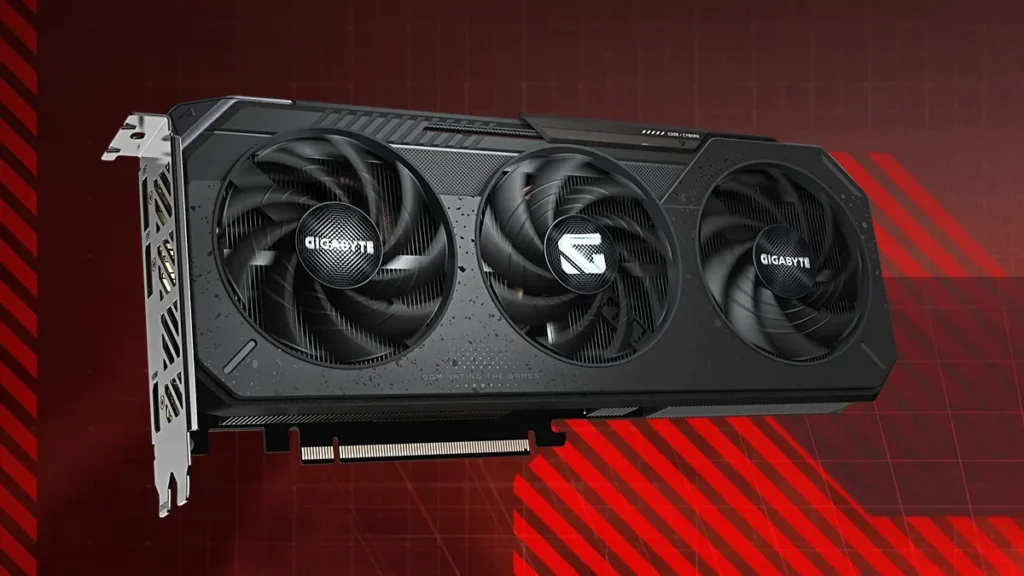
Despite packing more performance into a similar power envelope, the RX 9060 XT maintains excellent thermal characteristics. The Gigabyte Gaming OC model tested never exceeded 60°C during extended gaming sessions, while drawing slightly more than its rated 160W TDP at around 180W under full load.
This thermal efficiency becomes even more impressive when compared to NVIDIA’s competing RTX 5060 Ti, which has similar power consumption but often runs hotter and louder.
Value Proposition and Competition
With an MSRP of $349 USD (expected Indian pricing of ₹35,000-40,000), the RX 9060 XT positions itself as a strong value proposition in the mid-range segment. The 16GB of VRAM provides excellent future-proofing compared to cards with 8GB or 12GB configurations.
Against NVIDIA’s RTX 5060 Ti
The comparison comes down to priorities:
Choose RX 9060 XT if you want:
- Better value for money
- More VRAM for future games
- Excellent 1440p performance with 4K capability
- Strong ray tracing performance (finally!)
Choose RTX 5060 Ti if you prioritize:
- More mature software ecosystem
- Established developer support
- NVIDIA-specific features (DLSS, RTX Voice, etc.)
Future-Proofing with FSR Redstone
AMD has announced FSR Redstone, an upcoming update that will add ray reconstruction capabilities, neural radiance cache, and other advanced features to RDNA 4 GPUs. This suggests that the RX 9060 XT’s performance will continue improving throughout its lifespan – a compelling long-term value proposition.
Areas for Improvement
While the RX 9060 XT excels in most areas, there are some limitations to consider:
FSR 4 Game Support
Currently limited to 60+ titles at launch, though this number should grow rapidly. Some demanding games like Alan Wake 2 and Indiana Jones still struggle without FSR 4 support, making FSR 2’s lower quality modes more apparent.
8GB Variant Concerns
AMD offers an 8GB version at a lower price, but with modern games increasingly demanding more VRAM, the 16GB model represents much better long-term value. The 8GB variant should be avoided in favor of second-hand alternatives.
Software Ecosystem
While greatly improved, AMD’s software stack still lags behind NVIDIA’s in terms of additional features and third-party developer support.
The Verdict: AMD Delivers on Its Promises
The AMD Radeon RX 9060 XT represents a watershed moment for the company. For the first time in years, AMD has delivered a GPU that not only meets but often exceeds the performance expectations set during its announcement.
What AMD Promised vs. What They Delivered:
- ✅ High-refresh-rate 1440p gaming: Achieved
- ✅ 2x ray tracing performance improvement: Delivered
- ✅ FSR 4 as a game-changer: Confirmed
- ✅ Better efficiency than previous generation: Exceeded
Final Score: 8.5/10
Strengths:
- Exceptional 1440p gaming performance
- Surprising 4K gaming capability with upscaling
- Dramatically improved ray tracing performance
- Excellent thermal efficiency and power management
- Future-proof 16GB VRAM configuration
- Strong value proposition at ₹35,000-40,000
Areas for Improvement:
- Limited FSR 4 game support at launch
- Software ecosystem still developing
- Some games still favor NVIDIA’s mature feature set
Recommendation
The RX 9060 XT (16GB) is an easy recommendation for gamers seeking excellent 1440p performance with occasional 4K gaming capability. It finally gives AMD a truly competitive offering in the mid-range segment, one that doesn’t require compromises on ray tracing or upscaling quality.
If you’re building a new gaming PC or upgrading from a GPU that’s 2-3 generations old, the RX 9060 XT offers compelling performance that will serve you well for years to come. Just make sure to opt for the 16GB model – it’s worth the extra cost for the future-proofing alone.
AMD has successfully delivered on the RDNA 4 promise, and the RX 9060 XT stands as proof that competition in the GPU market benefits everyone.
Are you considering the RX 9060 XT for your next GPU upgrade? What games are you most excited to play with improved ray tracing performance? Share your thoughts in the comments below!
About The Author